
Verinode IQ
Crew Fit.
Build crews around how your people work.
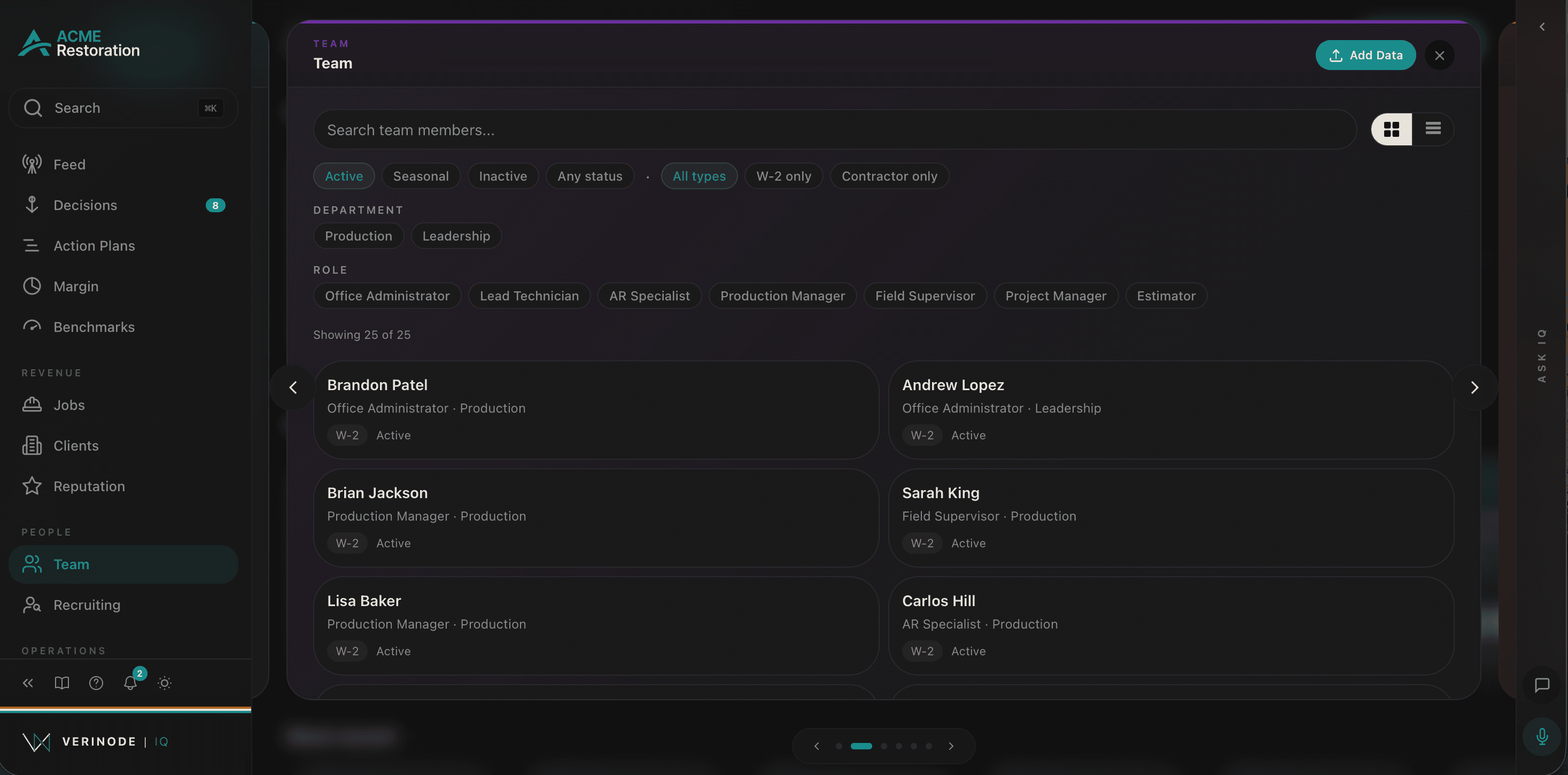
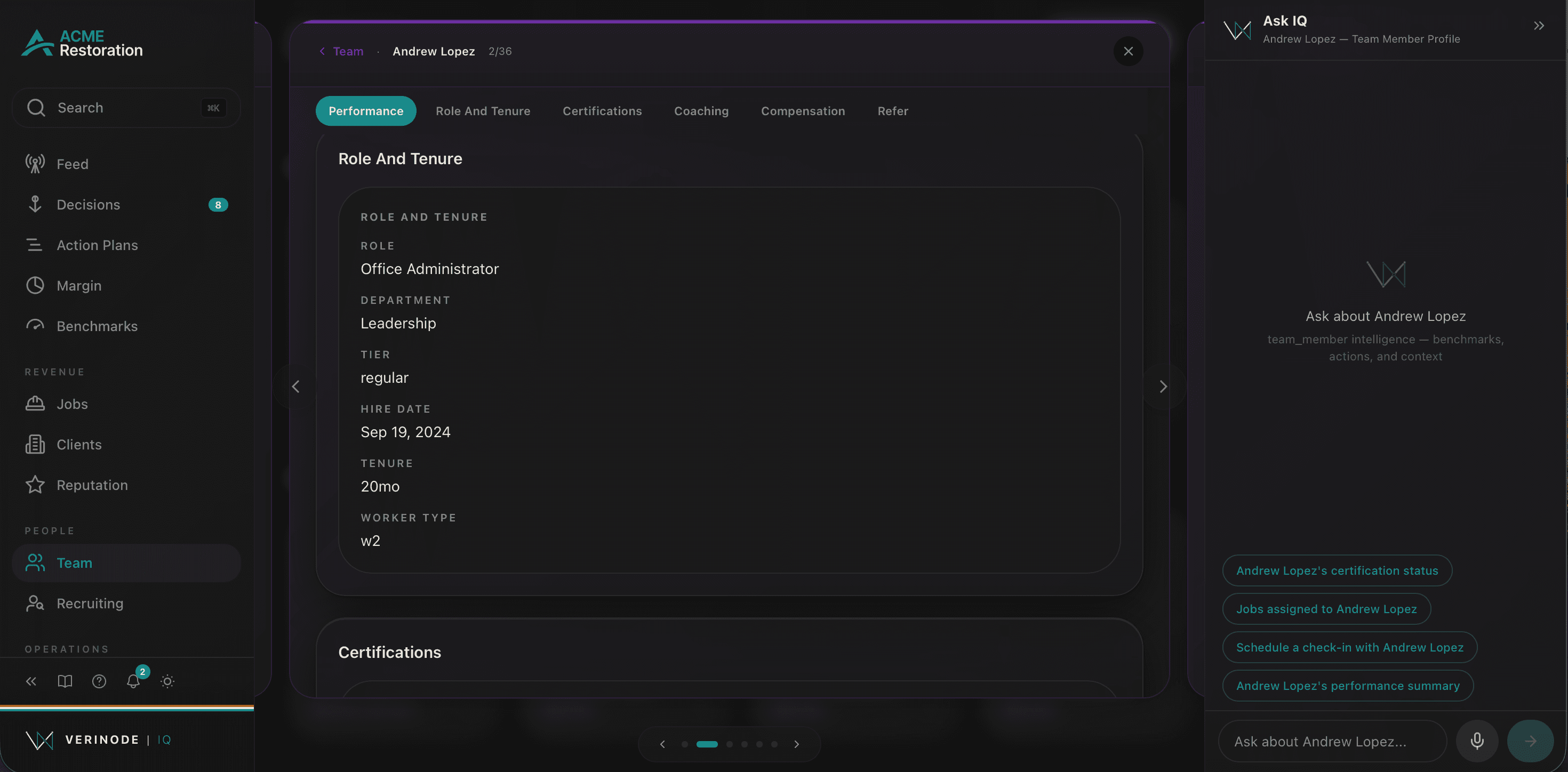
DISC profiles, next to the work they run.
app.verinode.ai
The temperament mix of a crew, at a glance.
Who fronts the upset homeowner, who runs the crew, who pushes the supplement, read next to the work each person actually does. So you build teams that hold under pressure instead of grind against each other.
app.verinode.ai · Team
How It Works For You
Staff a crew for balance
See the temperament mix of a team at a glance, so you build crews that hold together under pressure instead of grind against each other.
Put people where they thrive
Who's built to front the client, lead the crew, or push the supplement, so a strong worker lands in the seat that plays to them.
Hire for the real gap
The temperament your team is short on, so a new hire fills a need instead of doubling what you already have too much of.
Common Questions
What operators ask first.
What does DISC have to do with running a restoration business?
Restoration is people work under pressure: a project manager calming a flooded homeowner, a lead holding a crew together on a tear-out, an estimator pushing a supplement. DISC profiles describe how each person naturally communicates and handles stress, which is exactly what determines whether someone thrives in a role or burns out in it.
How does Verinode use the profiles?
It keeps each person's profile next to the work they actually do, so you can staff a crew for balance, match a person to the role that fits them, and see when a team is missing a temperament it needs. The profile is context for your judgment, not a label that decides for you.
Does this help with hiring?
Yes. When you know the temperament your crew is short on, you hire for the gap instead of hiring another version of who you already have. It turns a vague culture-fit gut call into a concrete picture of what the team actually needs.
Is my data safe?
Your raw data lives in its own encrypted database scoped to your account. Only anonymized aggregates reach the benchmarks, and your data is never sold to insurance carriers or shown to another operator. Personal profiles stay yours, the benchmarks never expose an individual operator, and the policy, architecture, and methodology are all published.
What Makes It Verinode
Why Operators Join
The operators who keep their best people put them in seats that fit.
Losing a good worker to the wrong role is avoidable. Membership is how you place them right.