
Verinode HQ
Diligence.
A target's real numbers, before you buy.
Normalized, benchmarked, risk priced.
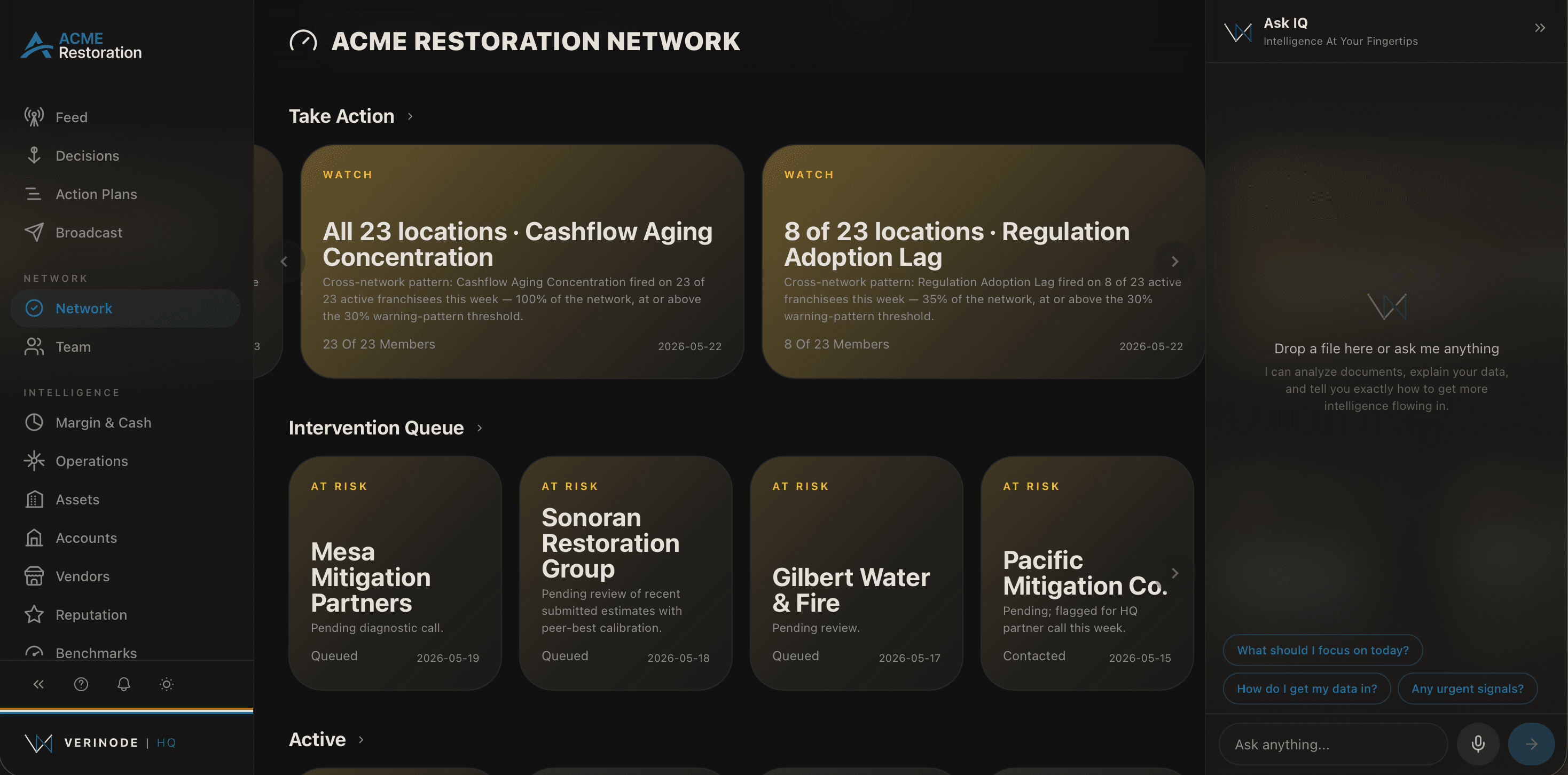
app.verinode.ai · HQ
The risk a summary P&L never shows.
Dressed-up margin, revenue leaning on one payer, compliance you inherit at close. Each normalized and quantified against the benchmark, so you price it into the offer instead of discovering it after.
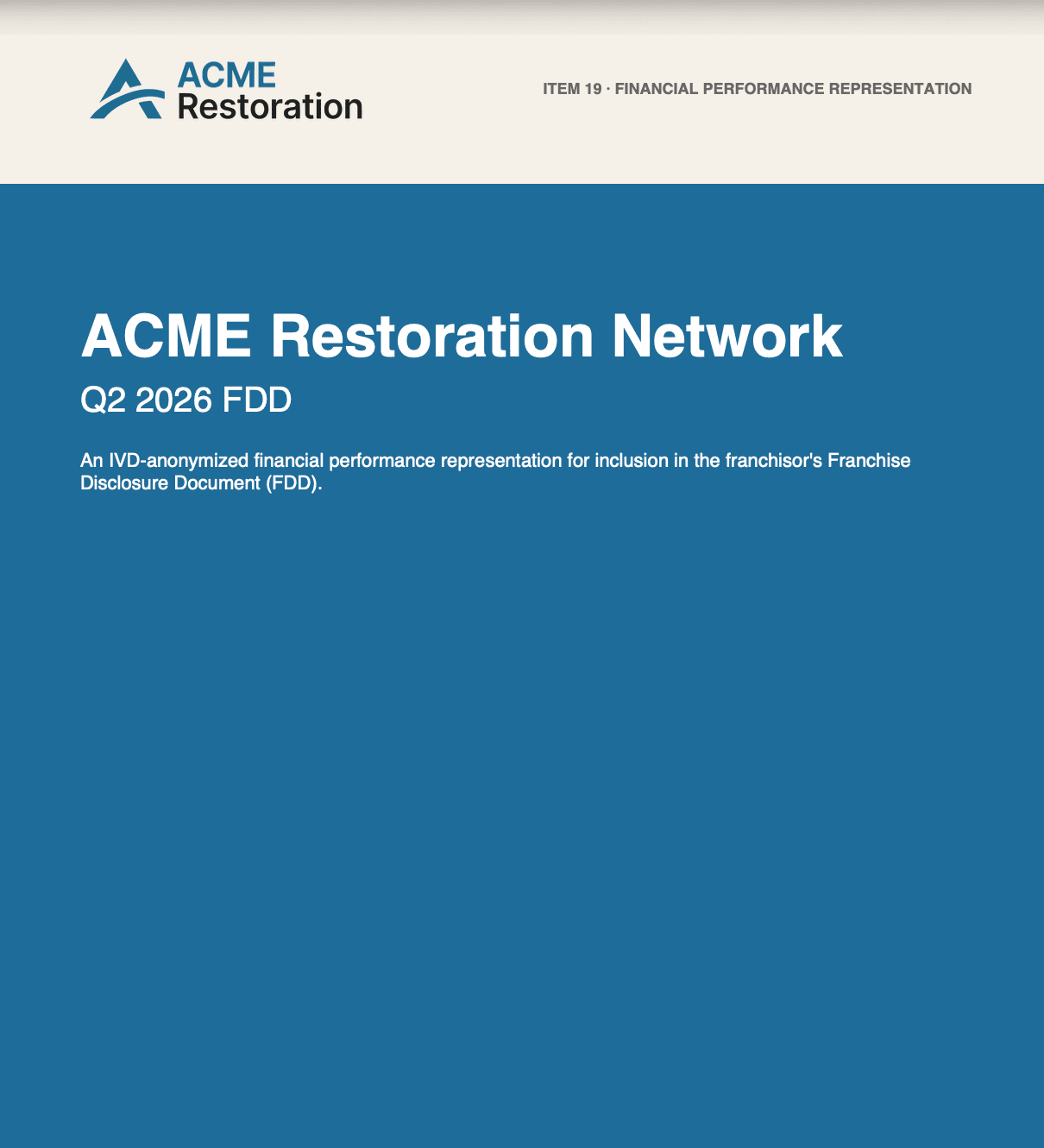
app.verinode.ai · HQ
How It Works For You
The target's data comes in
Financials and operations loaded and normalized to the same chart of accounts as your network.
It's benchmarked
Margin, cycle time, and concentration placed against comparable operators, strong from average at a glance.
You price what's real
The true margin, the risks quantified, the liability flagged, in a form you can take into the negotiation.
Built for the private-equity buyer running a roll-up.
Whether you're acquiring your first restoration platform or your fifteenth add-on, Verinode reads each target the way it reads the operators you already own: normalized to one chart of accounts, benchmarked against the network, and priced on the risk a clean presentation hides. Day one after close, the new operator is already on the same line as the rest of the portfolio, so integration starts from real numbers instead of a fresh reconciliation.
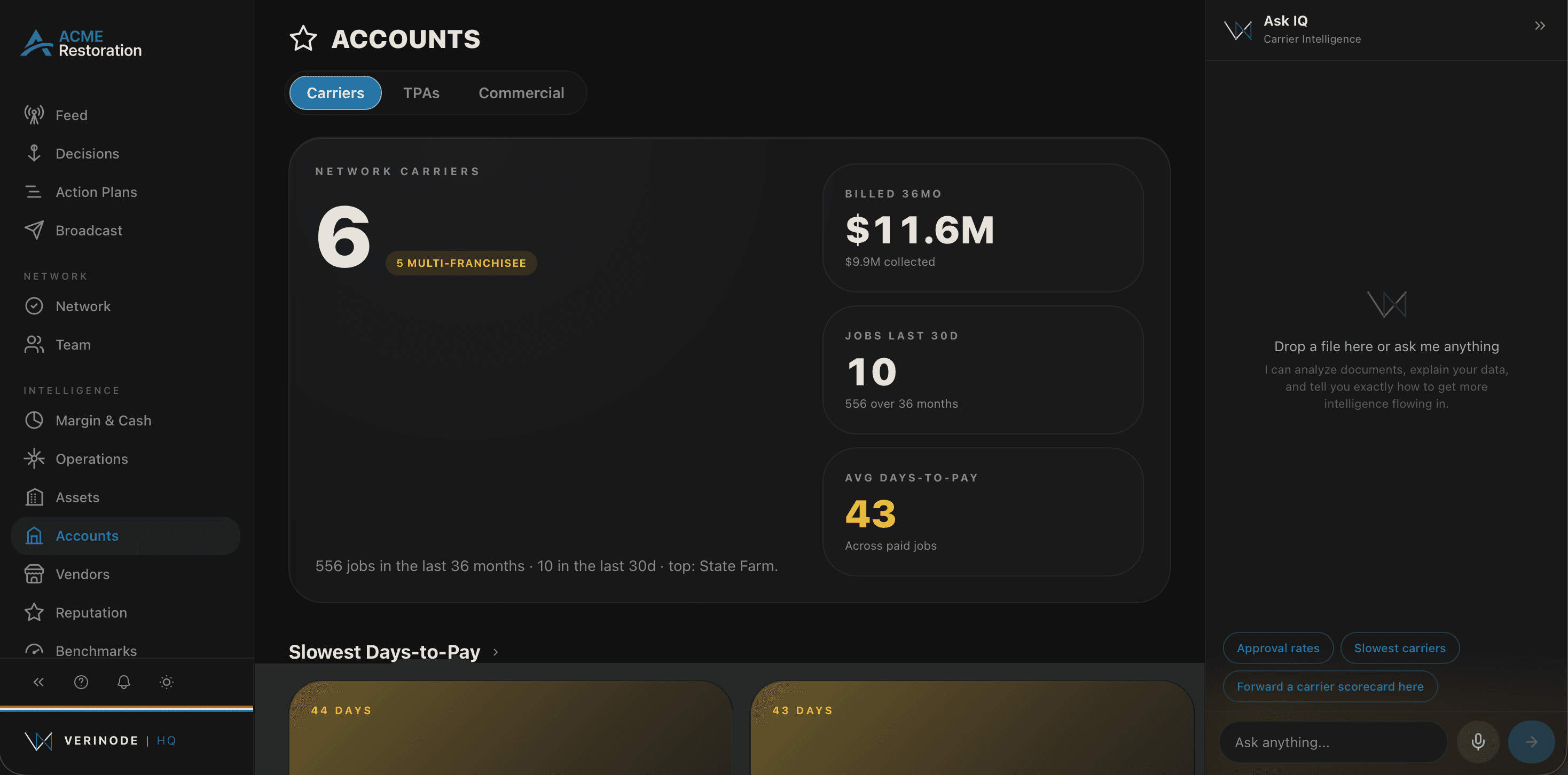
app.verinode.ai · HQ
Works with Verinode IQ
Read a target the way IQ reads every operator.
A target's books are normalized and benchmarked the same way every operator's Verinode IQ P&L is. That is what lets you compare an acquisition to your network on equal terms instead of trusting a presentation.
Rolls up
Operator P&Ls across the network set the benchmark the target is read against.
Flows down
After close, the new unit runs IQ like every other, and rolls up the same way.
Common Questions
What network leaders ask first.
How does Verinode help with acquisition diligence?
It reads a target operator's real numbers the same way it reads the network's: normalized to one chart of accounts, benchmarked against comparable operators, and decomposed into margin, cycle time, client concentration, and compliance. You see how the target actually performs and where the risk sits, not just what the offering memo claims.
Why does normalization matter for a deal?
A seller's P&L can look healthy because of how costs are bucketed, not because the business is. Mapping the target's books to a canonical chart of accounts strips out the accounting choices, so the margin you underwrite is the real one and you don't overpay for a presentation.
What risks does it surface?
The ones that don't show on a summary P&L: revenue concentrated in a single payer or client, a cycle time that ties up cash, compliance gaps that become your liability at close, and a margin that depends on one carrier relationship. Each is quantified against the benchmark so you can price it.
Is the target's data protected?
Yes. The same trust boundary applies in diligence: data is held encrypted, the analysis runs on normalized figures, and nothing about the target or the network is exposed beyond the parties to the deal. Operators own their records throughout.
Does this work for a private-equity roll-up?
It's built for it. A PE-backed platform reads each add-on the same way it reads the operators it already owns: normalized to one chart of accounts, benchmarked against the network, and priced on the risk a clean presentation hides. The moment a target closes, it's already on the same line as the rest of the portfolio, so day-one integration starts from real numbers instead of a fresh reconciliation.
What Makes It Verinode
Why Operators Join
The buyers who don't overpay read a target the way they read their own network.
Trusting a presentation is how deals go wrong. Verinode is how you see what's really there.